

The Emporia shopping centre offers a total retail area of approximately 93,000 square metres, divided over three shopping levels plus an open roof area with a park. The total floor area including offices, flats and parking space is a full 217,000 square metres.
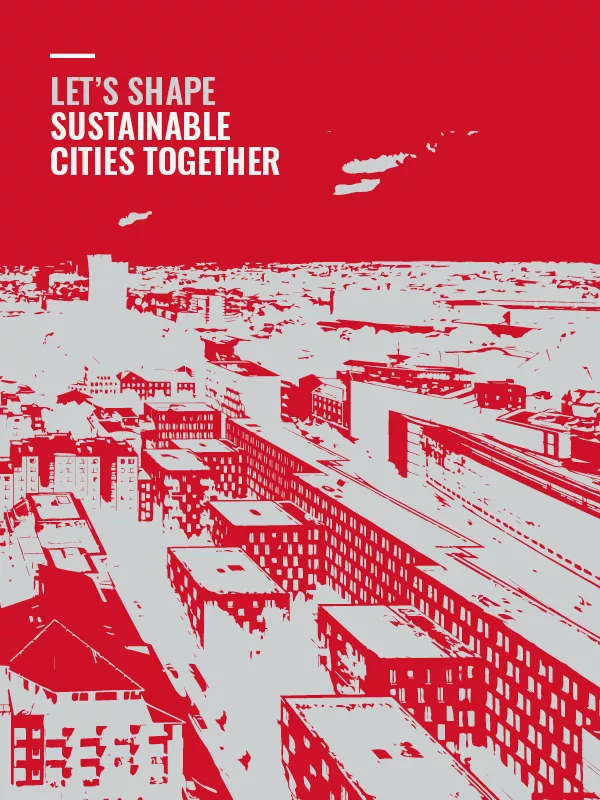
Our world is rapidly changing
Let’s shape more resource-conscious cities together
On the one hand, climate change is becoming increasingly extreme, with longer periods of drought and heat and periods of short, heavy rainfall.
On the other hand, there is population growth and migration including movement influenced by changing climate conditions. More people will live in less space, i.e. closer together.
Both aspects will determine how we all live in the future.
Closer together
The world population is growing faster than ever before, with more people migrating to our cities. It is estimated that around 68% of the world’s population could live in urban areas by 2050 (United Nations, Department of Economic and Social Affairs, Population Division (2018), World Urbanization Prospects: The 2018 Revision.).
This could add around 2.5 billion people to urban areas by 2050. Public spaces will decrease, further, and so will the quality of living.
Sharing limited urban space with more people can increase pressure on available space and may affect quality of life.

Climate change

Hotter summers make our cities sweltering. Heat waves are now a recurring phenomenon. Air conditioning alone may not address all aspects of rising urban temperatures and can increase energy demand.
Heavy rainfall can place significant pressure on urban drainage systems when large volumes of water need to be managed within a short period of time.
Architects, city planners and engineers play an important role in developing sustainable solutions that can help cities adapt to changing environmental and societal needs.
Useful urban spaces remain underutilised
Existing flat roofs are still untapped spaces
Smart spaces. Smarter cities
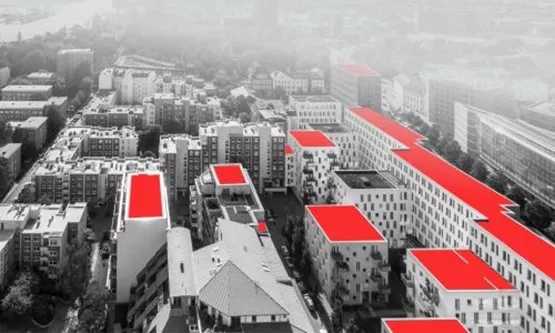
While our cities are well-developed, useful urban spaces remain underutilised. Existing flat roofs are still untapped spaces.
Roofs can help address several challenges that growing cities face, including
- shrinking biodiversity
- greater demand for energy
- increased competition for land
- and the effects of climate change
Flat roofs are used for many different purposes: from rooftop gardens that can contribute to carbon sequestration, support biodiversity and help regulate temperatures to roofs that provide space for renewable energy systems with solar panels and wind turbines.
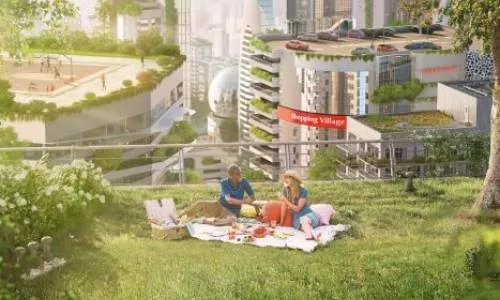
Community roofs can provide space for social and recreational activities and may contribute to the functional and commercial value of a property. Different functions are combined, increasing the value of flat roofs.
Activity roofs can support the development of more adaptable and resource-conscious urban areas by supporting adaptable uses and more efficient use of available space and resources.
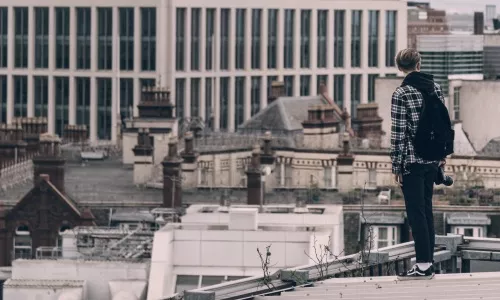
Optimise your roofs
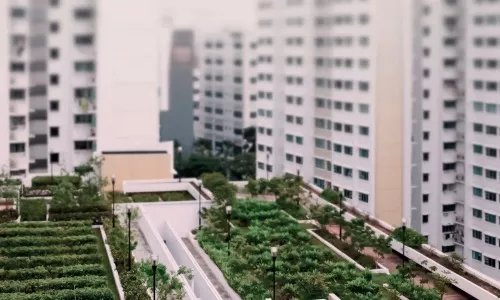
Urbanisation means more concrete and less greenery and a decrease in the quality of living.
Rooftop gardens and vegetation can contribute to the overall environmental performance of a building. Depending on their design, vegetated roofs can help manage rainwater, support biodiversity and contribute to local cooling and air-quality objectives.
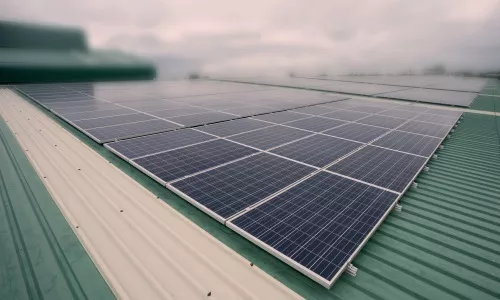
Water retention roofs can temporarily store rainwater and help reduce peak run-off and pressure on drainage systems. By integrating photovoltaics or wind turbines into building designs, a flat roof can provide space for renewable energy generation.
Activity Roofs can also provide a real sense of community. A shared space to enjoy the scenery and each other’s company.
With FOAMGLAS® insulation solutions, new and existing roof spaces can be designed for a wide range of uses, helping to make better use of available urban space.
FOAMGLAS® Compact Roof is designed to support durable Activity Roof build-ups and a wide range of current and future roof uses.
Using FOAMGLAS® cellular glass insulation can support the thermal performance of the roof as part of the overall building design. It opens up a world of possibilities.
Plan for tomorrow
Activity roofs can be a key part of our cityscapes, supporting adaptable use of urban space over time.
And, the financial benefits are only one side of the story.
By investing in Activity Roofs, you are supporting spaces that may encourage social interaction and more efficient use of urban land.
Public and private investment in Activity Roofs can contribute to more usable, adaptable and resilient urban spaces.
When constructing an activity roof, the key is to choose
The right build-up and materials
All roses have thorns

Activity roofs can provide valuable additional space and functionality when they are carefully designed and constructed.
When constructing an Activity Roof, the key is to choose the right build-up and materials. Considering the potential challenges related to water leakages, root penetration, deformation due to heavy loads and more, working with the proper solution is decisive for the performance and lifespan of the roof.
FOAMGLAS® Compact Roof is designed for long-term performance and can help mitigate key risks associated with Activity Roof construction when correctly specified and installed. Curious to find out more?
FOAMGLAS® projects around the world
More than 80 years of innovation and experience with FOAMGLAS® cellular glass insulation have resulted in projects around the world. We are proud of every single achievement and are delighted to share them with you.


52 Degrees Tower
Nijmegen
Netherlands
52 degrees is an impressive 86-meter tower in Nijmegen. The challenge: how do you insulate more than 10,000 m² of roof surface with no connection to the municipal sewer system? The FOAMGLAS® compact roof system was selected for its impermeable insulation and its ability to support durable, reliable roof performance.

Aquapark Kohoutovice
Brno
Czech Republic
The roof of Aquapark Kohoutovice in the Czech Republic is a unique architectural concept with a sheet metal roof in the shape of an armadillo. FOAMGLAS® boards allowed the sheet metal roof to be constructed over a wet environment, forming a perfect vapour barrier that is extremely resistant to high water vapour pressure.

OLV Hospital
Aalst
Belgium
The OLV Hospital, located on the outskirts of Aalst and originally built in 1904, has a long history of functional and technical development. For the expansion, long‑term performance and energy‑efficient building design were key considerations. FOAMGLAS® insulation was used on the different flat roofs, protecting the entrance hall from penetrating sunlight thanks to its heat resistant properties.

Šantovka Shopping Centre
Olomouc
Czech Republic
The Santovka Shopping Centre in the Czech Republic has tramlines running over the roof structure. To help support the immense mass of trams that weigh almost 100 tonnes, FOAMGLAS® boards were used. They are virtually incompressible, making this one of the highest load bearing roofs in Europe.

Siemens

Sydhavn School
Copenhagen
Denmark
Sydhavnen school in Copenhagen invites students to live an active lifestyle, motivating them to learn. FOAMGLAS® was used to insulate both the compact roof with wooden patio and the compact green roof on concrete of this modern school. A durable solution designed to support long‑term use in an educational building.

Walterboscomplex Tax Office Apeldoorn
Apeldoorn
The Netherlands
Between 2004-2006, the 40-year-old Walterbos Tax Administration complex in Apeldoorn was completely renovated and expanded with two towers. A plinth building with garden roofs and a 11.000 m² water retention roof was built all around the complex. The complex incorporates extensive energy‑saving measures and uses materials chosen for their durable and stable performance characteristics. Finished with a fully bonded roof covering (EPDM), this roof will remain insulated and watertight for decades to come.
Want to learn more about activity roofs?

Discover all insights of Activity roofs
In the document "Activity roof solutions designed for long-term performance", we address the many issues that designers face and that can lead to serious consequences if not anticipated.
Then we describe new solutions adapted to the uses of active roofs (photovoltaic, vegetated, accessible to pedestrians/vehicles).
Our document will provide you with the keys to designing and planning these usable spaces with broad design flexibility.