


The challenges of activity roofs
Activity Roofs can help you make the most of the scarce, underutilised space in our crowded cities, now and in the future.
The possibilities are endless.
However, there are possible pitfalls involved during both the construction and operational phase. It’s best to keep the following in mind at all times.
You don’t want to use the wrong insulation materials. Here’s why
Activity Roofs are popping up everywhere, becoming more than a trend in modern society. Activity roofs can offer additional usable space, but, there are risks involved with the construction.
Using the wrong insulation materials can have a major impact on your project. By adding additional layers of activity roof to a basic flat roof build-up, certain factors can increase the risk of damage. High repair costs, downtime and stress are just some of the consequences.
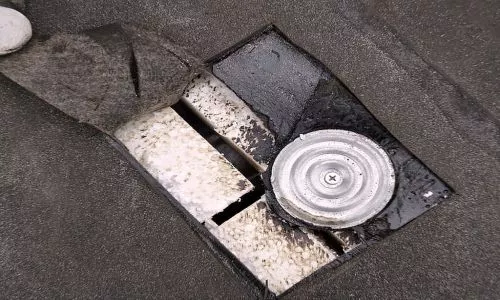
Challenges of an Activity Roof:
- Increased load from the use, construction and dead weight of roof layers, which may lead to deformation of the insulation material and damage to the roof surface.
- Change in interstitial condensation conditions in the roof build-up which can lead to moisture build-up through time.
- Interstitial condensation or leakages that result in reduced thermal performance due to moisture.
- Possible leakages difficult to locate and repair.
- Root penetration in case of vegetation on roofs may lead to leaks and reduced thermal performance.
- Frequent and intensive use with static and dynamic forces, results in a higher chance of waterproofing damage.
- A future change in the utilisation of a roof may cause problems if an inappropriate build-up is installed.
- Combustibility of materials may lead to a fire hazard.
A correctly specified roof build-up and installation are important for mitigating these risks. That’s where FOAMGLAS® Compact Roof comes in.
FOAMGLAS® helps you mitigate the risks
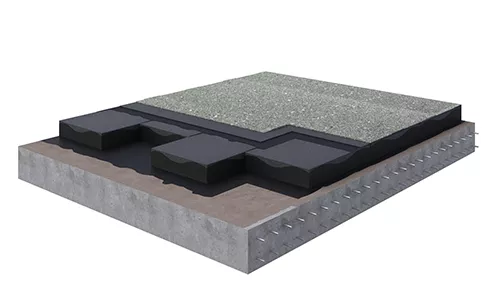
FOAMGLAS® Compact Roof offers you a fully-bonded and closed joints build-up. It is a fully bonded roof system designed to help reduce key risks associated with activity roofs when correctly specified and installed.
Here is how:
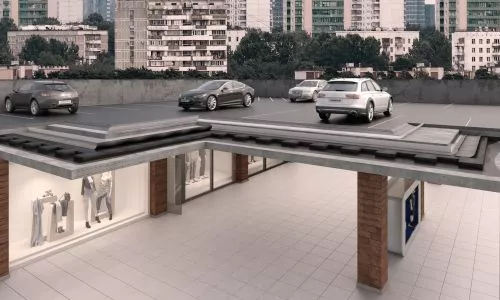
Higher load on activity and green roofs
FOAMGLAS® thermal insulation in a compact roof build-up can withstand different high compressive load needs and bear all loads permanently, safely and without affecting its insulation properties.
The closed glass cell structure also means it is dimensionally stable under specified design conditions. This ensures that the waterproofing and all layers of the build-up can support long-term roof performance.
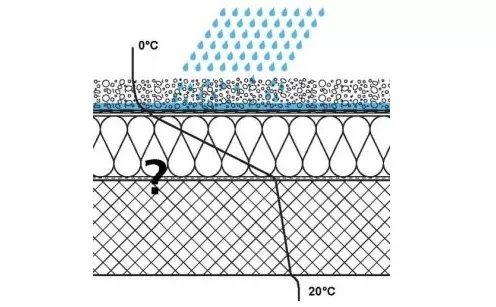
Change in interstitial condensation conditions
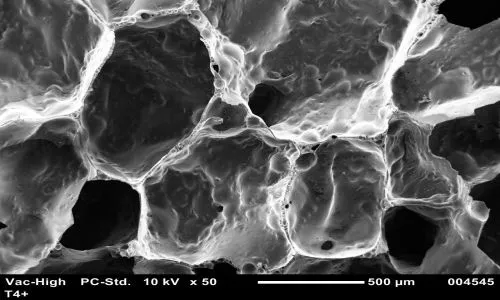
FOAMGLAS® thermal insulation consists of closed glass cells stacked on top of each other, creating a hermetically sealed volume that is impermeable and vapour resistant; performance depends on the complete build-up, detailing, installation and site conditions.
in this case the thermal resistance is guaranteed as well as no water or vapour issues can occur throughout the lifetime of the building.
Reduced thermal protection over time
FOAMGLAS® thermal insulation has been assessed for thermal conductivity and compressive strength in samples taken from existing buildings.
The cited third-party assessment found no substantial deterioration in the characteristics evaluated in the tested samples.

Root ingrowth
FOAMGLAS® thermal insulation does not absorb water and is designed to remain dry when correctly detailed and installed as part of the complete roof build-up. The cellular glass structure prevents roots from penetrating the material in search of water.
The cellular glass insulation itself does not provide a water source for roots; root resistance of the complete roof system depends on all specified layers and details.
Waterproofing damage when applying additional layers
With its closed cell structure, FOAMGLAS® thermal insulation can support specified loads with limited deformation when the correct product grade and build-up are selected.
Applied in a compact roof build-up, a rigid and stable roof volume is created, helping to reduce the risk of damage when installing additional layers.
Inability to locate and repair waterproofing defects
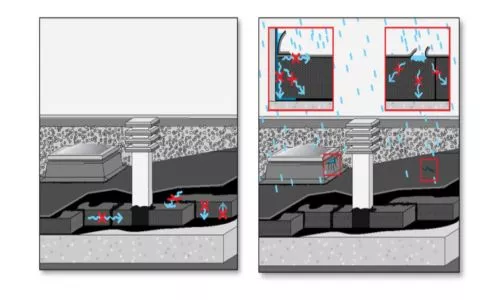
The FOAMGLAS® Compact Roof system is vapour tight and non-absorbent. The fully bonded, compartmented build-up is designed to restrict lateral moisture migration, which can help localise investigation and repair thanks to its small compartmented grid build up through the fully bonded and closed joints system.
Future changes in roof use
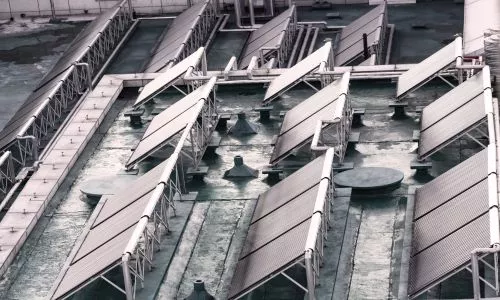
FOAMGLAS® Compact Roof insulation is vapour tight, non-absorbent and available in grades for defined compressive-load requirements. A range of Activity Roof uses can be designed over the Compact Roof build-up, subject to project-specific structural, drainage, fire and waterproofing checks.
Keep in mind that when it’s time to repurpose a roof, any damage due to an improper build-up can be costly and difficult to resolve. Avoid the stress and downtime with the right build-up and proper insulation.
Curious about the different types of Activity Roofs? Here’s what you need to know.
Want to learn more about activity roofs?



Discover all insights of Activity roofs

In the document "Activity roof solutions designed for long-term performance", we address the many issues that designers face and that can lead to serious consequences if not anticipated.
Then we describe new solutions adapted to the uses of active roofs (photovoltaic, vegetated, accessible to pedestrians/vehicles).
Our document will provide you with the keys to designing and planning these usable spaces with broad design flexibility.