

Swimming pool insulation
Designing for durability beyond the waterproofing membrane
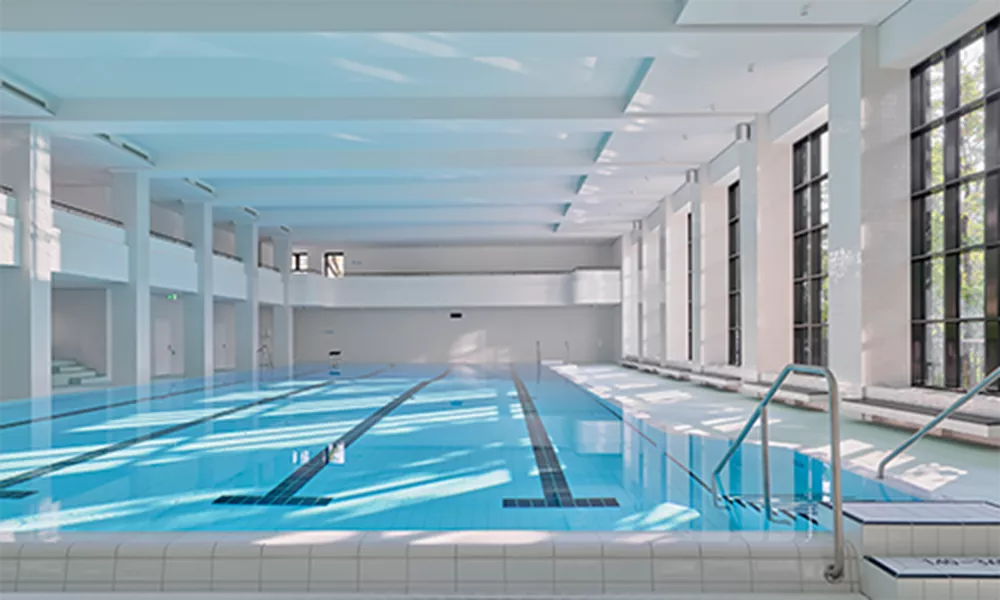
Swimming pools are among the most demanding construction projects. Effective swimming pool insulation plays an important role in maintaining thermal efficiency, controlling moisture and supporting long-term structural durability. Unlike most building projects, they are designed to continuously contain water, while protecting the surrounding structure from moisture, thermal movement and long-term deterioration.
Pool structures need to withstand constant hydrostatic pressure, repeated temperature changes and permanently wet conditions, often for many decades. Repairs are costly and very disruptive.
Designing swimming pools for long-term performance requires treating the structure as a complete system rather than a series of individual components. This is particularly important when specifying insulation in wet environments, where moisture exposure is continuous.
Why Water Resistant Insulation Matters
in Pool Structures
Waterproofing membranes remain an essential part of durable pool construction design, providing the primary barrier against water ingress while protecting the structural concrete beneath. They provide the primary barrier against water ingress and help protect the structural concrete beneath.
However, waterproofing is only one layer within the overall build-up.
If moisture reaches other components through imperfect detailing, or movement, which can cause damage to the waterproofing over time, the behaviour of those components becomes equally important. For example, some insulation materials can absorb water, affecting both their thermal performance and their long-term stability.
Considering how every layer responds to moisture is particularly important in swimming pool construction, where exposure to water is continuous. Materials that do not absorb water can help maintain their thermal and mechanical properties over the lifetime of the structure.
How Insulation Performs
in Wet Environments
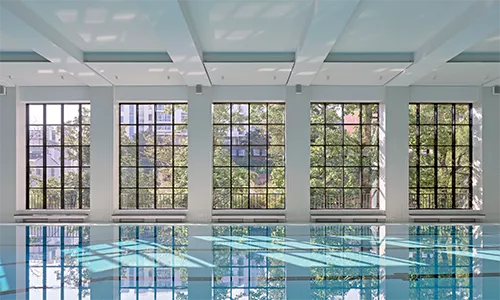
Swimming pools, by their very nature, mean constant and permanent exposure to water and water vapour. This makes swimming pools one of the most demanding examples of insulating in wet environments, where long-term moisture resistance is critical to building performance. Internal humidity levels are also a lot higher than in most other types of building. This higher level of humidity increases the demands placed on the building as a whole.
Insulation materials also tend to behave differently under these kinds of conditions. Properties such as water absorption and vapour permeability can influence how moisture moves through the construction and whether hidden deterioration develops over time.
FOAMGLAS® cellular glass insulation is water and vapour resistant because of its sealed cell structure. Rather than relying on applied coatings, its resistance to water is an inherent property of the material itself. This can help reduce the risk of moisture migration within the roof, wall, or below-ground pool structure.
For designers, the main objective will be to prevent leaks, but at the same time they need to find ways to reduce the potential for hidden moisture-related damage throughout the life of the building. Beyond thermal performance, persistent moisture can contribute to condensation, mould growth, material degradation and premature deterioration of adjoining construction elements. Considering how moisture behaves throughout the building envelope is therefore essential for achieving long-term durability.*
Structural Performance
of Swimming Pool Insulation Under Constant Load
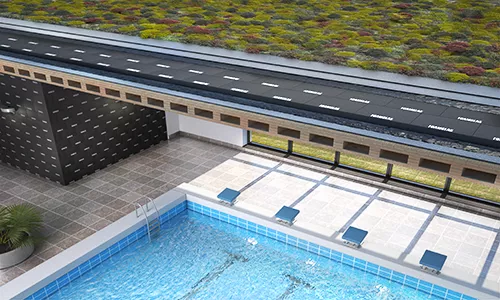
Pool structures are exposed to continuous loading from the water they contain. One cubic metre of water weighs approximately one tonne, placing substantial and permanent forces on floors, walls and other supporting construction. This makes load-bearing performance a key consideration when selecting swimming pool insulation for long-term structural reliability.
Insulation may also be required to support finishes, screeds and surrounding hard landscaping while maintaining its dimensional stability over many years.
Materials that deform under sustained load can affect adjacent construction and alter the performance of the overall system. Long-term compressive strength therefore becomes an important consideration, particularly where insulation contributes to the structural build-up.
Selecting materials that resist permanent deformation can help to maintain both thermal performance and construction stability throughout the service life of the pool.
Designing for maintenance
before problems occur
Failures within swimming pool construction are notoriously difficult to repair.
Accessing insulation or waterproofing behind pool linings often requires draining the pool, removing finishes and interrupting normal operation. For public leisure centres, hotels and sports facilities, this can result in significant loss of income in addition to repair costs.
Designing for durability from the start helps reduce these risks. Considering moisture behaviour, structural performance and material compatibility alongside waterproofing creates a more robust construction capable of performing under continuous exposure.
Examples of Durable Swimming Pool Insulation Projects
Several major aquatic facilities have adopted compact roof and cellular glass insulation systems in areas exposed to demanding moisture conditions.
At the Club Natació Atlètic-Barceloneta in Barcelona, FOAMGLAS® insulation was selected as part of a refurbishment project. The new design was to improve long-term durability in a challenging coastal environment, where both moisture and salt exposure place additional demands on the building envelope.
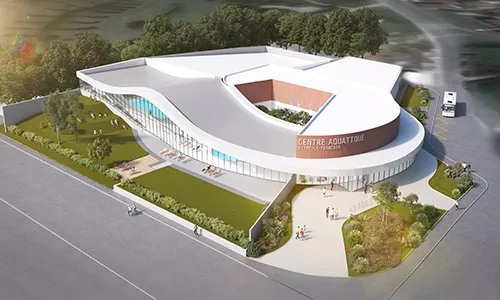
Similarly, the Aquatic Centre at Vitry-le-François in France incorporated FOAMGLAS® insulation within its roof construction to provide durable thermal performance while supporting the building’s long-term moisture management strategy.
Although each project presents different design requirements, both demonstrate the importance of considering insulation as part of the complete building envelope, rather than solely as a thermal layer.
Choosing Durable Insulation
for Swimming Pool Structures
Swimming pool insulation does far more than reduce heat loss.
In permanently wet environments, insulation also contributes to moisture management, structural stability and the long-term reliability of the building envelope.
For architects and engineers, selecting insulation should involve considering how materials will perform under real operating conditions over decades of continuous exposure to water, humidity and structural load.
Every swimming pool presents unique design challenges. For project-specific guidance on insulation for wet environments, contact the FOAMGLAS® technical team.
Source *https://www.gov.uk/government/publications/resistance-to-moisture-in-buildings
In need of an expert advice?
Get in touch!