
What does insulation do
Understanding the role of insulation in building performance
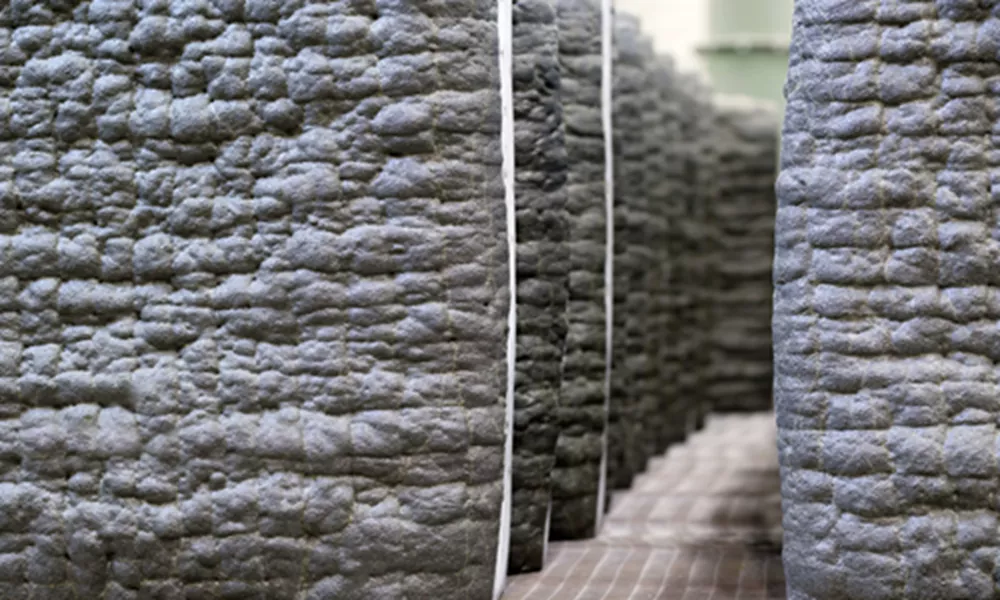
When people think about insulation, they often think about keeping heat in during winter, or keeping it out during summer. While that is certainly one of its most important functions, insulation plays a much broader role in how buildings perform over time.
Modern buildings are expected to be energy efficient, durable and resilient. Achieving these goals requires more than simply selecting a material with a low thermal conductivity value. Insulation interacts with moisture, structural loads and environmental conditions throughout the life of a building. This makes it a vital part of the overall structure.
Understanding these wider functions can help architects, engineers and building owners make more informed design decisions
What is Insulation designed to do?
At its simplest, insulation is designed to reduce heat transfer.
Heat naturally moves from warmer areas to cooler ones through three mechanisms:
- Conduction, which is heat passing through a material’s physical structure
- Convection, when heat is carried by moving air or liquids
- Radiation, when heat is transferred through electromagnetic waves
Insulation slows this movement of heat, helping buildings maintain more stable internal temperatures, reducing the energy required for heating and cooling.
The effectiveness of an insulation material is often described by its thermal conductivity (λ- value). A lower lambda value indicates that less heat passes through the material.
Building designers use thermal performance data alongside standards such as EN 12667 and EN ISO 6946 to assess how building elements contribute to overall energy and efficiency.
What influences insulation Performance?
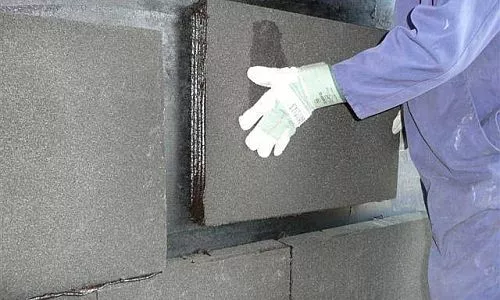
Thermal performance is often presented as a declared value measured under controlled laboratory conditions. Real buildings, however, rarely operate under laboratory conditions.
Several factors can influence how insulation performs in practice:
- Material structure and composition
- Installation quality
- Exposure to moisture
- Mechanical loading
- Temperature fluctuations
- Ageing and environmental conditions
This does not mean laboratory values are unimportant. Rather, it highlights that insulation should be considered as part of a complete building system rather than as an isolated material.

Beyond thermal performance: the addional roles of Insulation
Moisture interaction
Moisture is one of the most important factors affecting building performance.
Some insulation materials can absorb water or allow water vapour to move through the structure. Depending on the application, this may influence thermal performance, increase condensation risk or affect the durability of adjacent building components.
For this reason, designers often consider properties such as water absorption and water vapour transmission alongside thermal performance. These characteristics are commonly assessed using standards including EN 12087 and EN 12086.
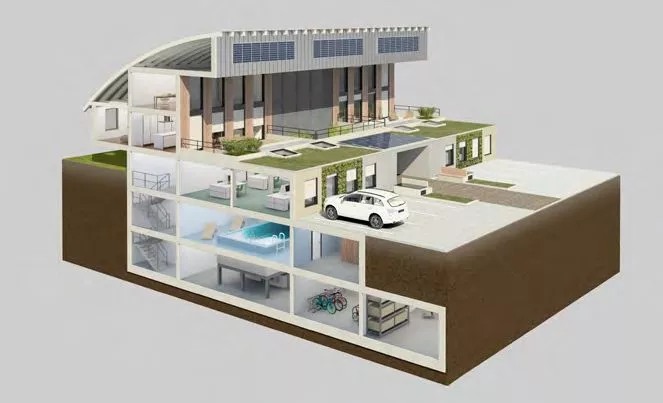
Understanding how insulation behaves in the presence of moisture is particularly important in roofs, below-ground construction and environments exposed to high humidity.
Mechanical performance
Insulation is often required to do more than provide thermal resistance.
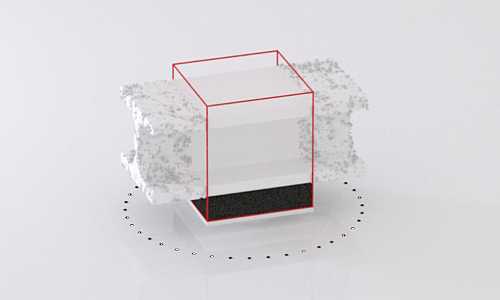
In many applications, particularly roofs, floors and below-ground structures, insulation may also be exposed to significant loads. These loads can be permanent, such as paving systems and roof finishes, or temporary, such as maintenance traffic.
Materials respond differently under compression. Some maintain their dimensions over long periods, while others may deform gradually under sustained load.
Compressive behaviour is commonly assessed in accordance with EN 826 as well as EN 826 and can be an important consideration when long-term dimensional stability is required.
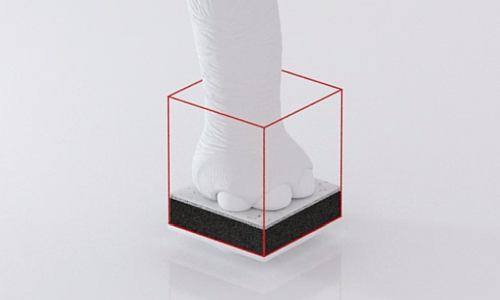
FOAMGLAS® cellular glass insulation is capable of bearing loads of 200kPa to 500kPa (SF=3[OB3.1]) , without deformation, and is designed to maintain performance under sustained load conditions, when correctly specified and installed.
Fire behaviour
Fire performance is another important aspect of insulation selection.
Building regulations and project requirements often specify reaction-to-fire classifications, particularly in public buildings, industrial facilities and roof assemblies.
European classifications are defined under EN 13501-1, which categorises how construction products respond when exposed to fire.
Insulation is only one part of the fire strategy, but its characteristics can influence the behaviour of the overall building assembly.
When tested to EN 13501-1, FOAMGLAS® insulation achieves Euroclass A1. This is the highest classification available. It means that the product is classified as non-combustible and will not contribute to fire growth, or to the production of flaming droplets.

Why insulation performance can vary in buildings
The difference between declared performance and in-use performance is often determined by the conditions surrounding the material.
Moisture exposure, installation quality, loading conditions and environmental factors can all influence how an insulation system performs throughout its service life.
This is why experienced designers typically evaluate insulation based on the requirements of the specific application rather than relying on a single performance metric.
A roof terrace, a museum roof, a cold-storage facility and a below-ground car park may all require insulation, but the demands placed upon that insulation can be very different.
Looking beyond thermal values
Insulation remains one of the most effective ways to improve building energy efficiency. Its role, however, extends way beyond reducing heat loss.
Moisture behaviour, mechanical performance, fire resistance and long-term durability can all influence how an insulation system performs in practice.
Considering these factors together helps ensure that insulation contributes not only to energy performance, but also to the long-term reliability of the building as a whole.
FOAMGLAS® cellular glass insulation is dimensionally stable and impermeable. It can help reduce condensation risk when used as part of a properly designed building system. It also supports reliable mechanical and thermal performance over time.
Understanding insulation performance starts with understanding the demands of the application. For further technical guidance, contact the FOAMGLAS® team for project-specific advice.
* You can find more details about our product specifications in our declaration of performance documents DOP 1000010015B FOAMGLAS® T4+, DOP 100010050B FOAMGLAS® F and DOP 100010030B FOAMGLAS® S3.