

Designing resilient data centres
The role of insulation in data centre performance, risk management and uptime
Data centres are designed with one overriding objective: continuous operation. Every element of the building, from the electrical infrastructure to the cooling systems, needs to perform reliably around the clock. Even a brief interruption can have significant operational and financial consequences.
As demand for digital infrastructure continues to grow across Europe, designers are balancing increasing expectations for energy efficiency with equally demanding requirements for resilience, fire safety and lifecycle performance.
This emphasis on long-term operational efficiency is reflected in the European Code of Conduct for Energy Efficiency in Data Centres, developed by the European Commission’s Joint Research Centre (JRC). The initiative encourages designers and operators to adopt best practices that improve energy efficiency while maintaining the reliability and availability of critical IT infrastructure.
Data center insulation plays an important role in achieving these objectives. While data centre insulation is often associated with reducing heat loss, its contribution extends much further. Moisture behaviour, fire performance and long-term stability can all influence the reliability of critical building systems and support continuous uptime.
How Data Centre Insulation
Supports Thermal Stability
Data centres depend on stable and carefully controlled environmental conditions to ensure the reliable operation of servers and critical support systems. and supporting equipment.
Cooling systems work continuously to remove heat generated by IT equipment, maintaining stable operating temperatures throughout the facility. Insulation helps reduce unwanted heat transfer, allowing these systems to operate more efficiently and supporting more consistent thermal conditions.
However, thermal performance is only one part of the picture. Designers increasingly seek reliable thermal insulation systems capable of maintaining performance throughout decades of continuous operation. Maintaining that performance throughout the life of the building is equally important, particularly where facilities are expected to operate continuously for decades.

HVAC Condensation Prevention
Through Effective Insulation
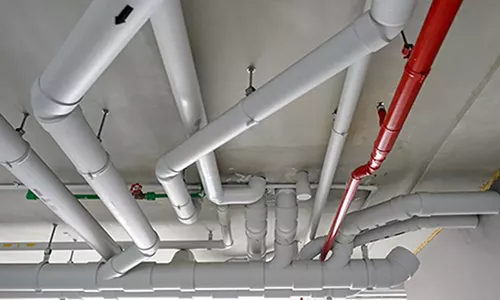
Modern data centres rely extensively on chilled water pipework, air handling units and mechanical cooling equipment. While data centres are not generally humid environments, wherever cold surfaces meet warm, humid air, condensation becomes a potential risk. For this reason, HVAC condensation prevention insulation forms an important part of data centre cooling system design, helping reduce moisture-related risks within critical cooling infrastructure.
Industry guidance such as the ASHRAE Technical Committee 9.9 recognises that maintaining stable environmental conditions is fundamental to reliable data centre operation. While temperature and humidity ranges are carefully controlled to protect IT equipment, designers must also minimise condensation risk within cooling infrastructure and building services to support long-term system reliability.
The formation of condensation on insulated pipework, valves or cooling equipment can lead to corrosion, reduced insulation performance and increased maintenance requirements. In critical environments such as data centres, uncontrolled moisture may also affect the reliability of electrical infrastructure.
For this reason, designers consider not only thermal conductivity but also how insulation respond to long-term exposure to humidity and condensation. Materials that resist moisture ingress and maintain their thermal properties under such conditions can support more reliable long-term system performance.
Cellular glass insulation is frequently specified for critical HVAC systems and infrastructure because its closed-cell structure prevents the ingress of water and water vapour. Unlike many insulation materials, these properties are inherent to the material itself and remain unchanged throughout its service life. This helps maintain consistent thermal performance and reduces the risk of moisture-related deterioration in applications where reliable long-term operation is essential.
Considering moisture management alongside thermal performance supports the long-term reliability of the cooling system as a whole.
Fire-Safe Insulation for Data Centres
Data centres contain high-value equipment that supports essential digital services. Protecting these assets requires a comprehensive fire strategy that considers both active and passive fire protection measures.
The insulation used within roofs, plant rooms and mechanical services forms part of this wider strategy. European reaction-to-fire classifications defined by EN 13501-1 help designers assess how construction materials behave when exposed to fire. For facilities where uptime is critical, specifying fire-safe insulation data centres can rely on is an important part of a wider passive fire protection strategy.
Where project requirements demand non-combustible materials, insulation selection can contribute to limiting fire spread within the building envelope and supporting overall resilience.
Reliable Thermal Insulation Systems
Depend on Material Stability
Unlike many commercial buildings, data centres rarely experience periods of reduced operation. Mechanical systems run continuously, exposing insulation to sustained environmental conditions over long service lives.
Moisture exposure, ageing and installation quality can all influence how insulation performs in practice. Materials that maintain their thermal properties under real operating conditions help reduce performance drift and support more predictable energy use throughout the building’s lifecycle.
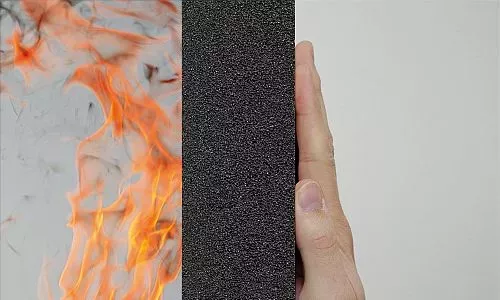
Because FOAMGLAS® cellular glass insulation is impermeable to water and water vapour and remains dimensionally stable throughout its service life, it helps prevent moisture-related deterioration and changes in thermal performance. This can support more predictable operation of cooling infrastructure and reduce the risk of long-term performance drift.
Long-term consistency is particularly valuable in facilities where maintenance windows are limited, and operational disruption must be minimised.
Designing for resilience rather than repair
Downtime is one of the greatest risks facing any data centre. While backup systems help maintain operational continuity, preventing problems at the design stage remains the most effective strategy. For operators, even small interruptions can affect service availability, operational continuity and customer confidence, making reliability a primary design objective.
This means considering insulation as part of the complete building system rather than an isolated product. Thermal efficiency, moisture management, fire performance and durability all contribute to the reliability of the facility over time.
Materials that remain dimensionally stable, resist moisture ingress and retain their performance under demanding conditions can help reduce maintenance requirements and support long-term operational resilience.

Looking beyond energy efficiency
As digital infrastructure expands, data centres must deliver high levels of availability while meeting increasingly demanding requirements for energy efficiency, resilience and lifecycle performance.
Insulation remains essential for controlling heat flow, but its contribution extends beyond energy efficiency alone. Stable, moisture-resistant insulation supports predictable thermal performance and helps protect critical systems, reducing the risk of failure and operational downtime.
By considering insulation as part of an integrated design strategy, architects, engineers and facility owners can help create data centres that are not only efficient, but resilient, reliable and prepared for continuous operation.
Every data centre has its own operational requirements. For project-specific guidance on insulation for critical infrastructure, moisture management and long-term thermal performance, contact the FOAMGLAS® technical team.
In need of an expert advice?
Get in touch!