

Below ground insulation and permanent load:what specifiers need to know
Designing below ground insulation for decades
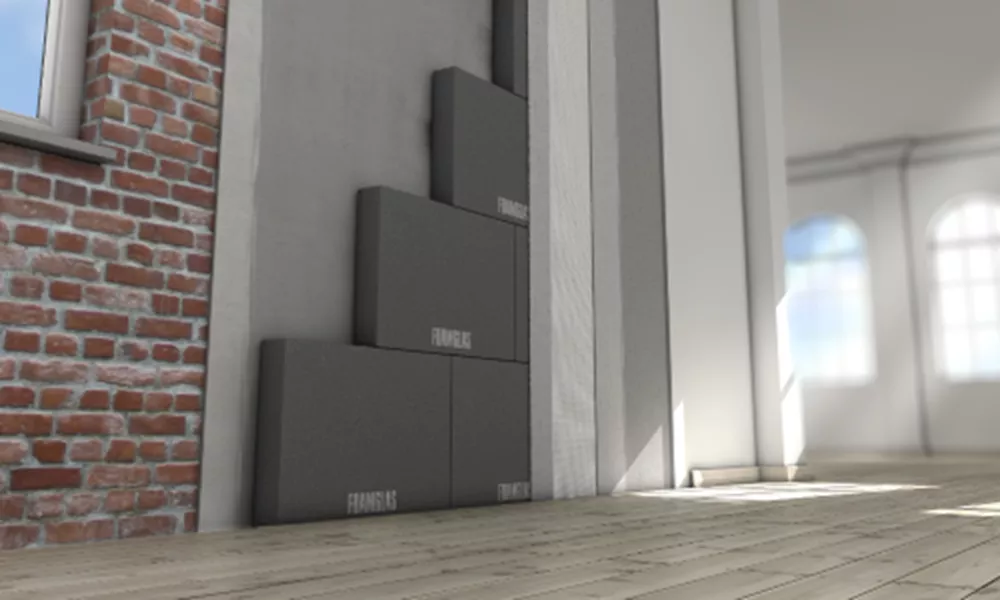
Choosing the right below ground insulation is a one-time decision with long-term consequences. Once construction is complete, access for repair or replacement is typically impossible. Below ground insulation is a crucial part of your structural system. Its long-term mechanical performance is therefore just as important as its thermal efficiency.
Below ground insulation must withstand permanent structural load for decades. Sustained pressure comes from structural weight, live loads, traffic, landscaping, rising groundwater, and shifting soils.
Over a building’s life cycle, insulation must withstand this constant pressure without deforming or compressing. Deformation can disrupt the thermal envelope and redistribute loads in unexpected ways.
Over time, even small changes can damage a building’s structural integrity, finishes, and energy performance.
In practice, insulation products are often selected based on declared compressive strength. This value is determined using EN826 annexe A which measures short-term compression under load.
Declared compressive strength does not indicate how a material behaves under sustained pressure over many years.
Some insulation products experience long-term deformation, known as creep, even when they meet declared compressive strength requirements.
Because below-ground insulation cannot be easily upgraded or replaced, long-term behaviour must be considered at the specification stage.
Basement depths are increasing as requirements for underground space evolve. Heavier structures and deeper foundations place greater demands on insulation performance.
These trends increase the importance of long-term dimensional stability under sustained load.
FOAMGLAS® insulation products have EN826 Annexe A declared compressive strength values ranging from 500 to 1600 kPa. Test EN826 Annexe A specifically outlines the uniform load bearing capabilities of insulation materials which do not compress before the load bearing capability is recorded.
such as this provides our customers with reassurance that our insulation products will not deform under sustained loads.
Below ground, thermal efficiency depends on insulation remaining intact and in position. If insulation settles, deforms or compresses:
- thermal bridges can form
- heat loss calculations become inaccurate
- condensation risk increases
- structural loads can shift
FOAMGLAS® cellular glass insulation is rigid and dimensionally stable. Its closed-cell structure supports consistent behaviour under sustained load conditions.
Declared compressive strength values range from 500 to 1600 kPa, depending on the product. Performance is verified under sustained load conditions.
FOAMGLAS® insulation is unaffected by moisture. Our products maintain dimensional stability in damp conditions, supporting reliable mechanical and thermal performance over time.
Below ground insulation must cope with groundwater exposure, thermal demands, and permanent load for decades.
FOAMGLAS® insulation offers a reference service life of up to 100 years, as substantiated in our product-specific Environmental Product Declarations (EPDs).
For more information about our testing standards, sustained load behaviour and real-world applications, download our Below Ground White Paper.
Contact the FOAMGLAS® technical team for project-specific guidance on below ground insulation design.