

Cold to ambient process piping and equipment
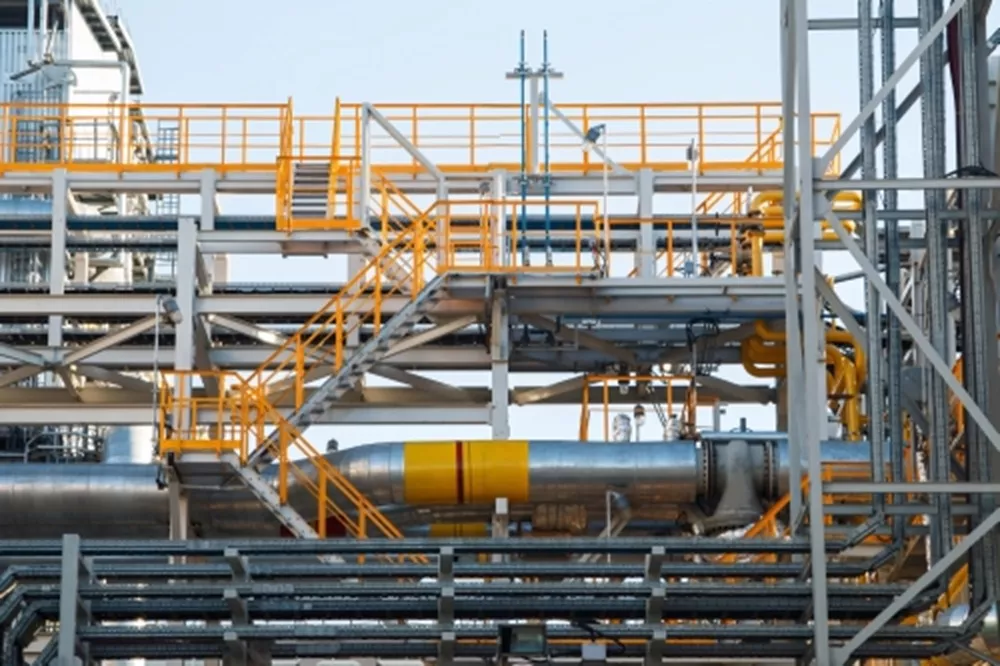
Thermal insulation solutions for piping and equipment operating at below ambient temperatures.
Equipment operating at temperatures lower than ambient is subject to condensation. Traditional insulation materials are more or less pervious to gases, and thus sensitive to humidity in the air that may condense within the insulation system. This is why a closed cell insulation material is a vital requirement in cold environments.
The requirements to take into consideration in cold service piping are the limitation of heat transfer for economic reasons, limitation of surface condensation, and the control of the process. In some conditions, the fire protection requirement may also contribute to the choice of insulation material.
The heat transfer limitation is typically more influenced by economic than technical factors. A high-performing FOAMGLAS® insulation system can help to ensure that the operating costs are kept at a minimum with your system running as efficiently as possible.
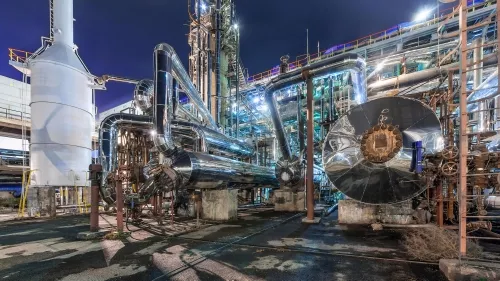
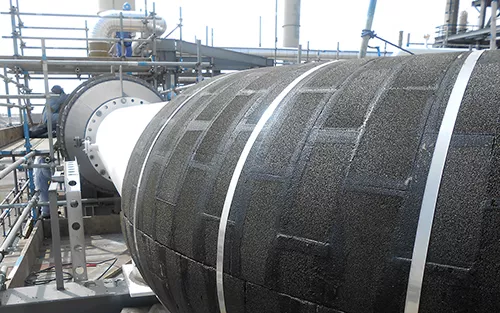
The difference in temperature between cold process piping and the ambient temperatures outside of the pipes create an environment that is prone to condensation and possible penetration of moisture.
By using a closed cell FOAMGLAS® insulation system you can help prevent moisture entering your insulation system. This will help provide an efficient and high-performing system that keeps its thermal properties throughout its life, helping to reduce long-term energy consumption.
Fire protection is often an additional requirement, depending on the content running through the pipes. Flammable liquids can be soaked up by non-closed cell insulation, creating possible fire hazards. Using FOAMGLAS® insulation helps limit this hazard as it is impermeable to most chemical substances and non-combustible.
for Service Temperatures between -4°C and + 15°C (25°F and 59°F):
- One or more layers of FOAMGLAS® cellular glass insulation dry-applied and sealed with a PC® Sealant.
- Potential anti-corrosion layer applied on the insulated surface.
- Potential anti-abrasive layer.
- Fabric reinforced coating or metal jacket.



Legal notice
The information relating to the products and systems contained on this website is provided in good faith and for general information purpose only. Such information is in any event subject to our product’s legal notice, the content of which users are invited to acknowledge under the following link: Legal Notice