

Retentionsdächer: Beitrag zum Klimawandel
Herausforderungen des Klimawandels und Lösungen für den Bau
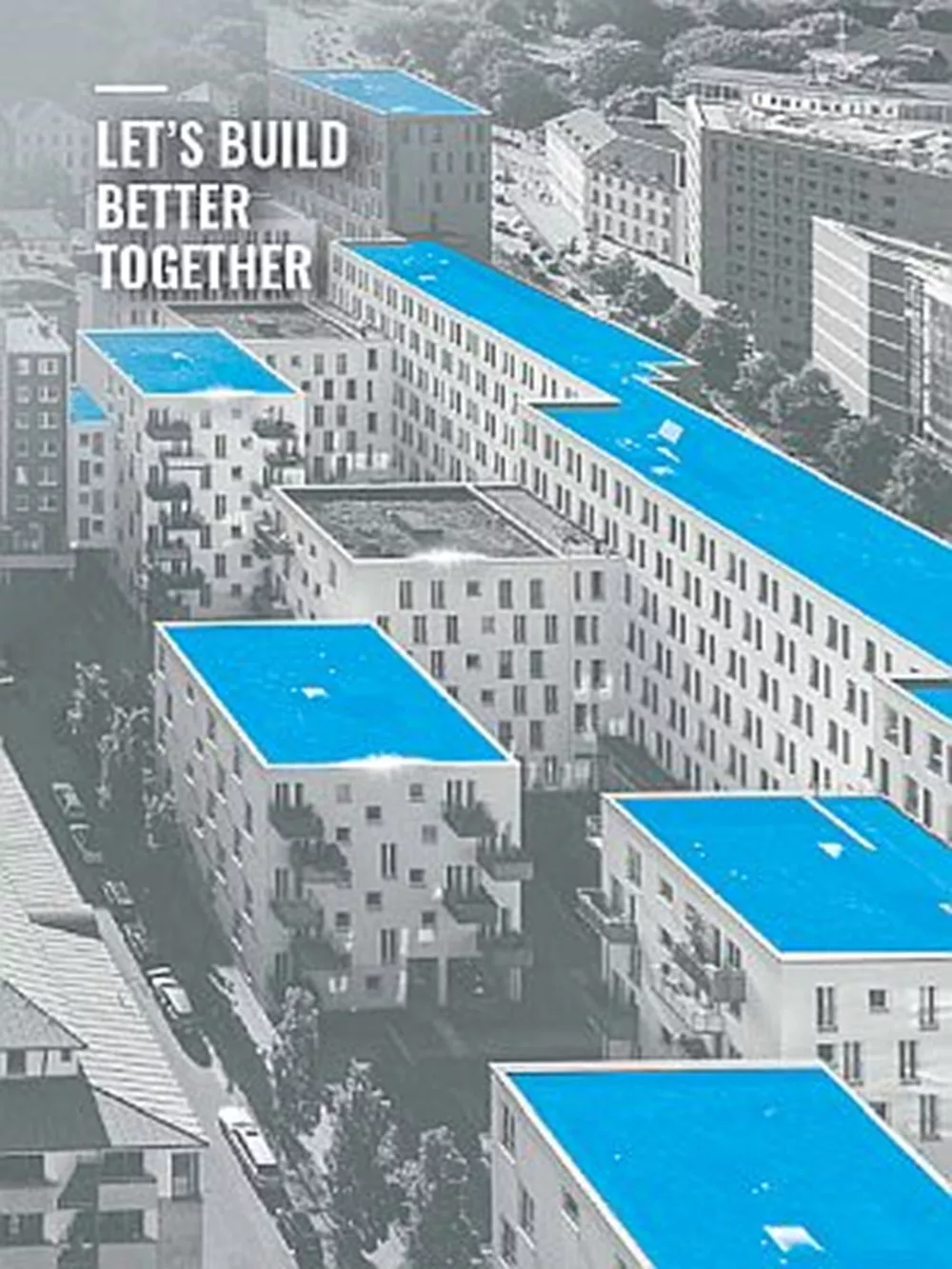
Mit der zunehmenden globalen Erwärmung werden wir immer häufiger mit der Gefahr extremer Dürren und Regenfälle konfrontiert sein. Diese Fragen stehen daher ganz oben auf der Tagesordnung. Mit Retentionsdächern können wir Regenwasser, das auf Flachdächer fällt, speichern und vorübergehend puffern.
Aber Dächer mit dauerhafter Wasserspeicherung stellen natürlich viel höhere Anforderungen an Konstruktion und Material. Mit dem FOAMGLAS® Kompaktdachsystem erfüllt jeder Dachaufbau höchste Ansprüche an Nachhaltigkeit und Zuverlässigkeit.
In trockenen Sommern sinken die Pegel der Flüsse und des Grundwassers oft so stark ab, dass die Regenfälle im folgenden Winter die Wasserressourcen nicht mehr auffüllen können. Der Klimawandel macht den Unterschied zwischen zu viel und zu wenig Wasser noch extremer. Trockenperioden werden noch trockener, und wenn es regnet, fällt in kurzer Zeit noch mehr Wasser vom Himmel. Infolge der globalen Erwärmung enthält unsere Atmosphäre nämlich mehr Wasserdampf, so dass die Wahrscheinlichkeit, dass die Wolken gesättigt sind, abnimmt.

Ein Schritt über grüne Dächer hinaus
Klassische Gründächer sind bereits eine hervorragende Lösung. Sie halten das Regenwasser, das auf das Dach fällt, zurück und geben es dann langsam über die Verdunstung wieder ab. Sie fungieren als eine Art Puffer und tragen dazu bei, dass die Kanalisation und das Wassersammelsystem bei starkem Regen nicht überlastet werden.
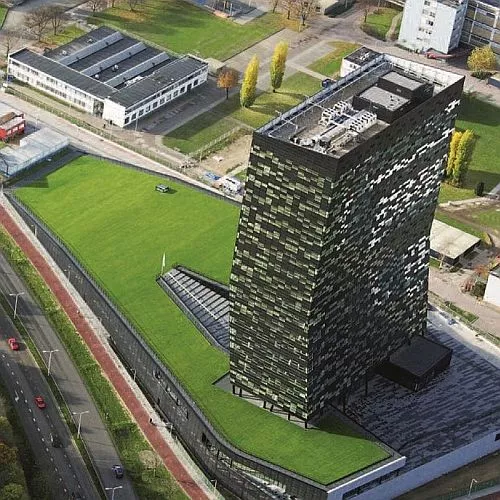
Retentionsdächer, auch "blaue Dächer" genannt, gehen noch einen Schritt weiter. Jedes Gründach speichert Wasser, aber Sie haben wenig Kontrolle darüber, was genau damit passiert. Bei einem Retentionsdach haben Sie das.
Das hat zwei Vorteile: In langen Dürreperioden wirken Retentionsdächer als nützliche Speicher, und bei starken Regenfällen wird das Regenwasser verzögert oder gar nicht in die Kanalisation abgeleitet. So kann in dicht bebauten, gefährdeten Gebieten die Belastung durch Regenwasser erheblich reduziert werden. Gleichzeitig bieten Retentionsdächer zusätzliche Perspektiven für eine nachhaltige Wiederverwendung des aufgefangenen Regenwassers, z. B. für die Toilette oder die Bewässerung von Pflanzen. Deshalb werden Retentionssysteme häufig mit einer Dachbegrünung kombiniert.
Neben der Speicherung und Pufferung von Regenwasser haben Retentionsdächer einen weiteren wichtigen Zusatznutzen. Da Regenwasser eine kühlende Wirkung hat, bleibt die Innentemperatur niedriger. Das bedeutet mehr Komfort im Sommer und erhebliche Einsparungen bei der Klimatisierung.
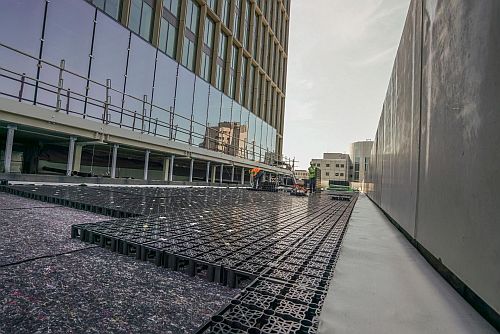
Da sich auf Dächern permanent Wasser befindet, müssen Retentionsdächer besonders hohe Anforderungen erfüllen. Nicht nur die Folgeschäden an den darunter liegenden Wohn- oder Geschäftsräumen, sondern auch die Schäden an der Infrastruktur des Daches und der Einrichtung z. B. eines Zierteiches können enorm sein. Deshalb muss auf die Qualität der Materialien, die Ausführung und den dauerhaften Schutz der Abdichtungsschicht besonders geachtet werden. Auch bei der Ausführung und den Anschlüssen sollten keine Zugeständnisse gemacht werden.
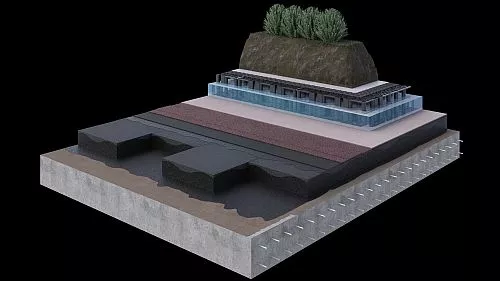
Die Unterkonstruktion eines Retentionsdaches besteht fast immer aus Beton. Beton ist wasserdicht, außer in schwächeren Bereichen wie Durchdringungen oder Aufkantungen. Daher muss eine Betonunterkonstruktion mit einer wasserdichten Dämmung kombiniert werden, die vollständig mit der Unterkonstruktion verklebt ist. Sollte die Dacheindeckung beschädigt werden, ist das Risiko, dass die Durchdringungsstelle mit einer Schwachstelle in der Unterkonstruktion zusammenfällt, sehr gering. Sollte dies ausnahmsweise doch einmal der Fall sein, kann das Problem schnell behoben werden, da das Versagen der Abdichtung lokal begrenzt ist und schnell erkannt werden kann. Und - vor allem - das FOAMGLAS® Kompaktdach-Prinzip macht einen horizontalen Wassertransport absolut unmöglich.
Beim FOAMGLAS® Kompaktdach wird der wasser- und dampfdichte Schaumglasdämmstoff mit Bitumen vollflächig auf die Unterkonstruktion (Beton) oder den Untergrund (vollflächig verklebte Tragschicht) geklebt und alle Fugen ebenfalls mit Bitumen ausgefüllt. Diese vollständige und gegenseitige Verklebung stellt sicher, dass keine Feuchtigkeit über, unter, zwischen oder innerhalb der Dämmplatten eindringen kann. Bei ordnungsgemäßer Ausführung und Detaillierung führen Schäden daher nie zu Undichtigkeiten oder Folgeschäden.
FOAMGLAS® Dachdämmung mit dauerhaftem U-Wert
Nicht nur die hervorragende Abdichtung macht das FOAMGLAS® Kompaktdach zur idealen Lösung für Retentionsdächer. In der Nutzungsphase ist es wichtig, dass die Dachkonstruktion ihre ursprüngliche Leistungsfähigkeit beibehält. Seit mehr als 50 Jahren hat sich der Schaumglasdämmstoff als der am sichersten gedämmte Dachbaustoff erwiesen. Die geschlossene Struktur der Glaszellen, aus denen es hergestellt ist, macht Schaumglas zu einem außergewöhnlich zuverlässigen Dämmstoff für die anspruchsvollsten Arten von aktiv genutzten Dächern: Wasserdächer, Terrassendächer, Gründächer, Parkdächer.
Schaumglas ist der einzige Dämmstoff, der seinen Dämmwert nachweislich auch dann beibehält, wenn die Dachhaut beschädigt oder abgenutzt ist. Auch nach fast einem halben Jahrhundert sind FOAMGLAS® Kompaktdächer noch so trocken und effektiv wie damals, als sie realisiert wurden. Ein FOAMGLAS® Kompaktdach ist zu 100 % wasser- und dampfdicht und bleibt daher auch zu 100 % trocken.
Die höchste Druckfestigkeit
Darüber hinaus hat Schaumglas die beste Druckfestigkeit aller Dämmstoffe. Die Druckfestigkeit von FOAMGLAS® Platten für die Dacheindeckung liegt je nach gewünschter Dämmstärke zwischen 0,5 und 1,6 MPa. Das bedeutet, dass die Platten Lasten von 50 bis 160 Tonnen pro m² tragen können. FOAMGLAS® bleibt zudem über die gesamte Lebensdauer eines Gebäudes bei allen Temperaturzyklen, unter allen Bedingungen und bei jeder Belastung form- und maßstabil.
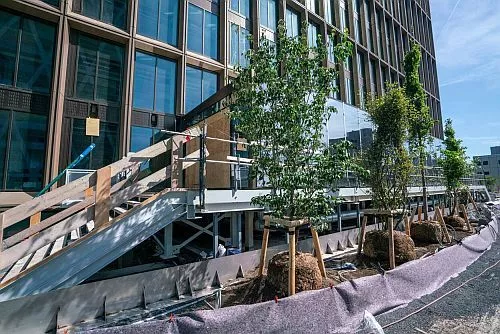
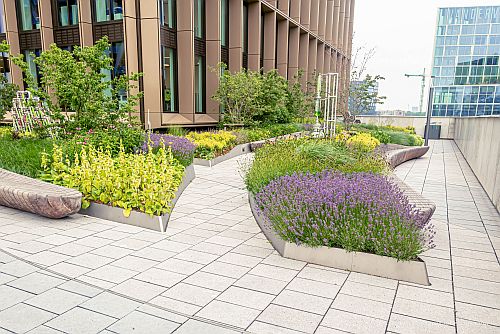
Das FOAMGLAS® Kompaktdachsystem wird aufgrund seiner außerordentlichen Wasserdichtheit, seiner hohen und langfristigen Zuverlässigkeit und seiner außergewöhnlichen Druckfestigkeit immer häufiger für Retentionsdächer eingesetzt. So auch beim Gebäude der Europäische Arzneimittel-Agentur (EMA) an der Zuidas in Amsterdam.
Um eine Überlastung der öffentlichen Kanalisation bei starken Regenfällen zu vermeiden, sollte die Zufuhr während dieser Spitzenbelastung so weit wie möglich reduziert werden. Dies kann z. B. durch den Bau von unterirdischen Wasserspeichern, durch die Anlage von Wadis, Teichen oder Überlaufgebieten und in städtischen Gebieten zunehmend durch den Bau von Wasserpuffern auf Dächern geschehen. Mehrere Länder haben zu diesem Zweck inzwischen Vorschriften erlassen. In diesen Vorschriften kann beispielsweise festgelegt werden, mit welcher Verzögerung das Regenwasser von einem Grundstück in die Kanalisation eingeleitet werden darf. Außerdem gibt es staatliche Zuschüsse für verschiedene Lösungen. Die Vorschriften sind sehr vielfältig und können von Gemeinde zu Gemeinde unterschiedlich sein.